Medical
Autism Model.
An interactive bilingual systems map designed to make complex clinical, genetic and biochemical findings easier for families and clinicians to understand together.
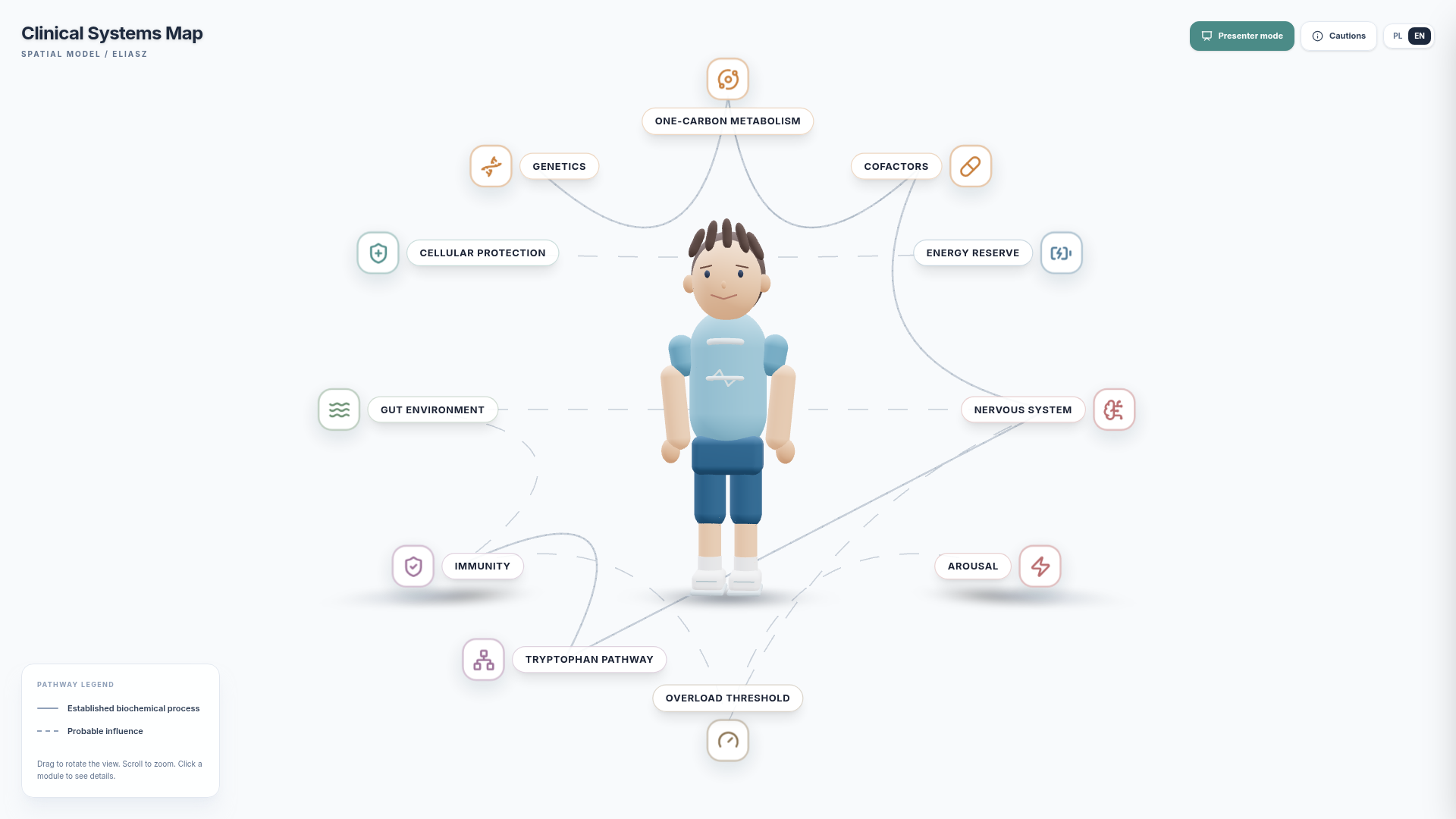
Many findings.
No shared mental model.
Information was spread across clinical and genetic reports, each describing individual findings, variants and pathways. A report or spreadsheet could list them, but could not clearly show how they might relate.
The product needed to be understandable to parents, useful during clinical discussion and explicit about the difference between measured findings, susceptibility and plausible mechanisms.
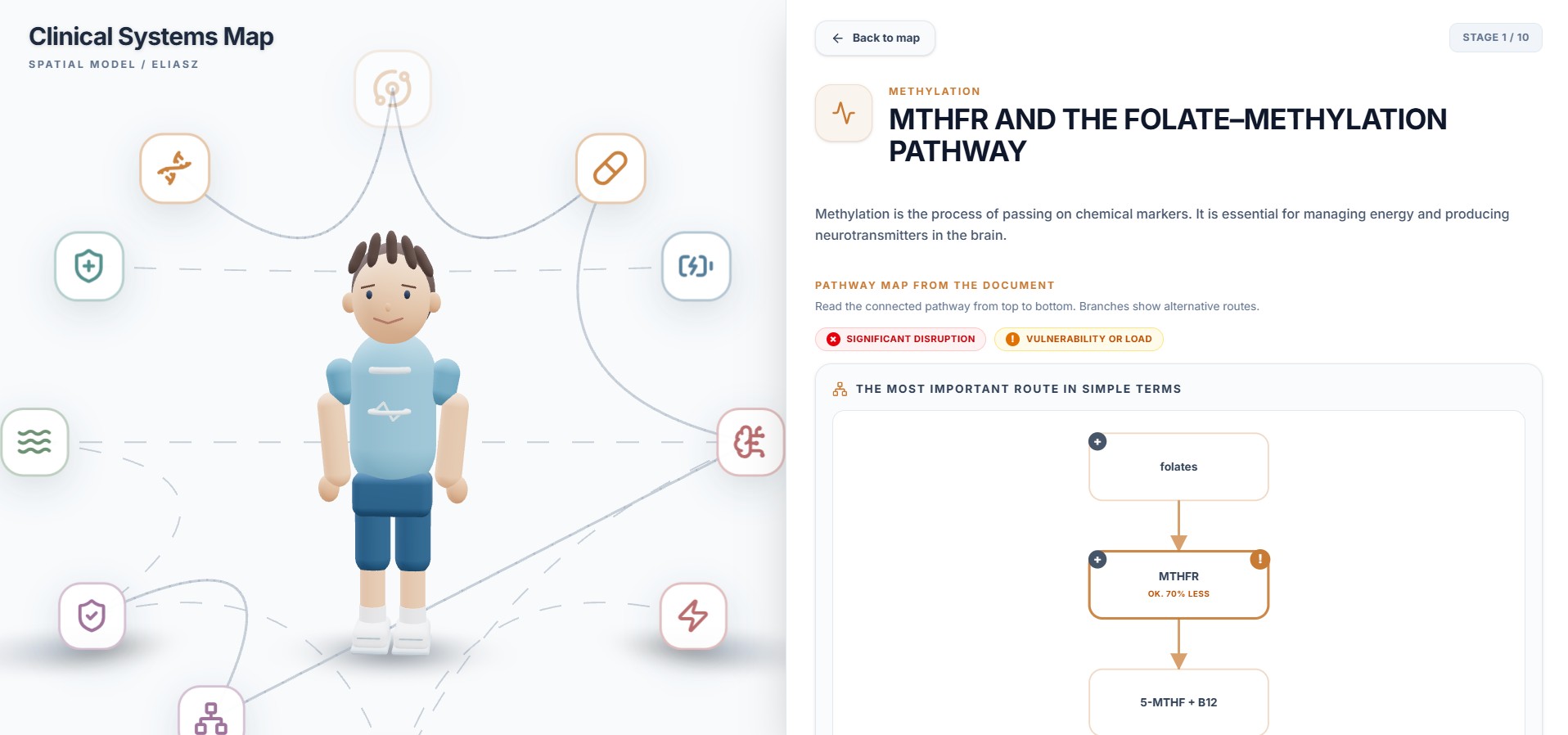
Connected diagrams explain dependencies between findings and show the important routes in simpler clinical language.
A spatial clinical
communication tool.
Maps and pathway diagrams
A rotatable 3D systems map and 49 connected pathway diagrams explain medical dependencies between genes, metabolites, enzymes and biological processes. Visual branches distinguish established biochemical processes from probable influences.
Presenter mode
A guided ten-stage presentation takes families and clinicians through the model in a controlled sequence, with progress, stage context and clear next-step navigation. Users can leave the presentation at any point and explore freely.
Bilingual by design
Complete Polish and English experiences include automatic browser-language detection and a manual language control.
Responsive access
Desktop and mobile interfaces, responsive SVG pathways and a non-WebGL fallback keep the model usable across devices.
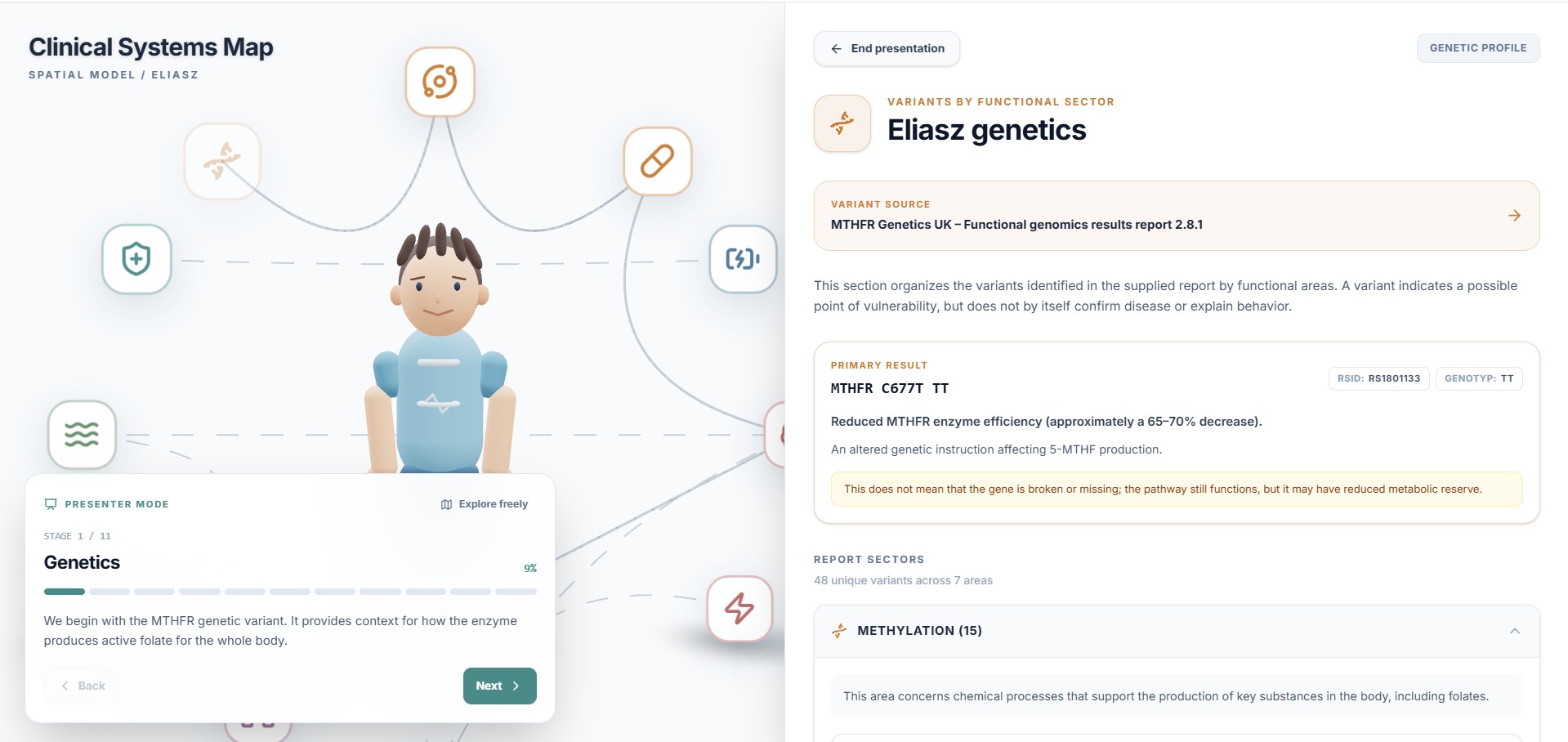
A guided stage sits beside the live systems map, while the detailed clinical evidence remains available in context.
Certainty is part of the interface.
The product does not present every association as equally certain. Evidence levels are embedded throughout the experience so genetic susceptibility is not mistaken for disease or laboratory evidence.
Directly supported by a laboratory result or several consistent findings.
Biologically plausible, but not directly confirmed as dysfunction.
The available information does not establish a significant problem.
Designed around what should not be concluded.
The model is a communication tool, not a diagnostic engine. Clinical cautions and limitations are integrated into the content rather than left to a general disclaimer.
Fragmented findings became a structured, explorable systems model.
Families and healthcare professionals can use the maps and diagrams to examine what has been measured, how medical dependencies connect across systems, what may represent susceptibility, where evidence is incomplete and what should not be concluded.
Open Medical Autism Model